Building cyber resilience for a world of inevitable incidents, systemic outages, and supply-chain shockwaves
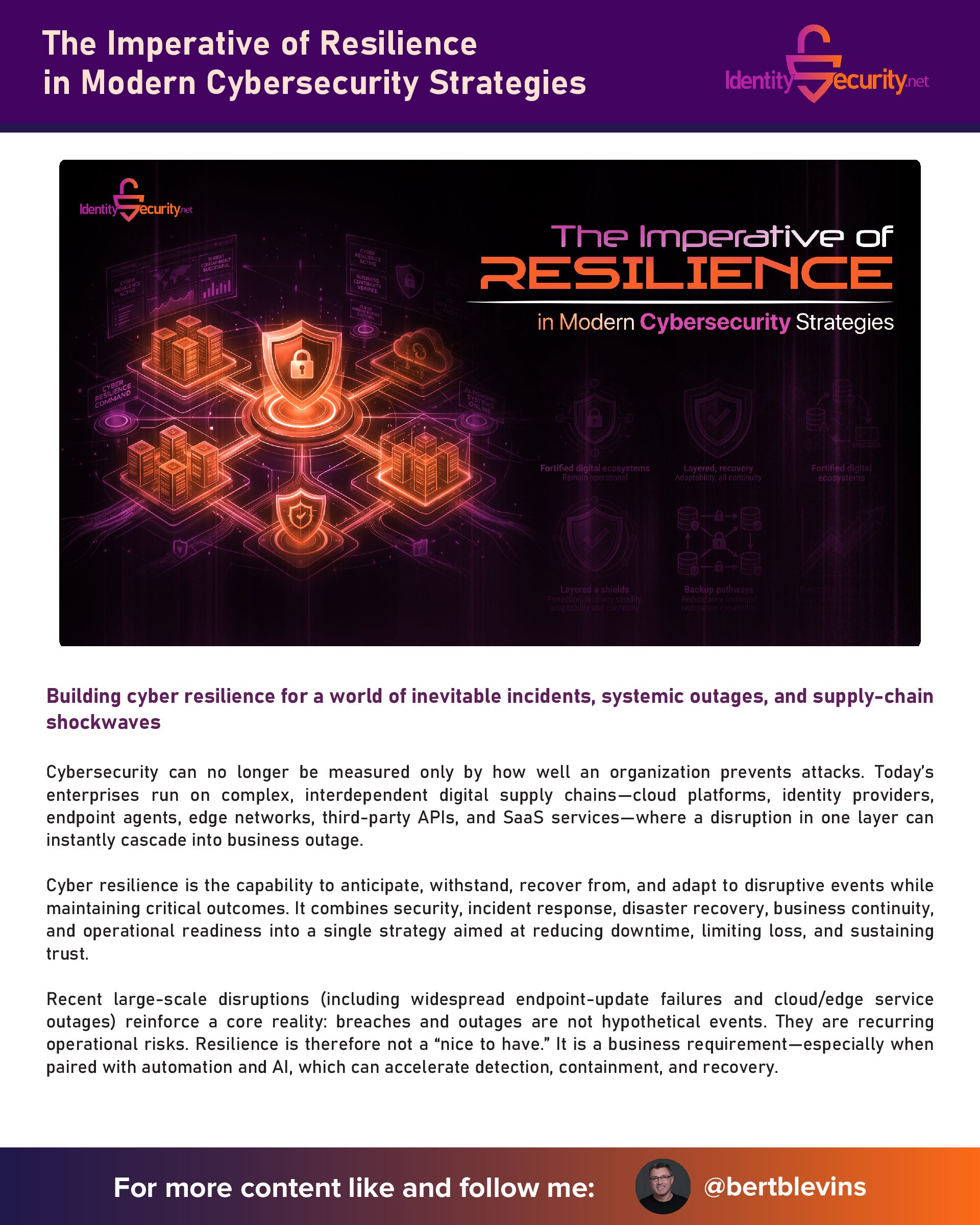
Cybersecurity can no longer be measured only by how well an organization prevents attacks. Today’s enterprises run on complex, interdependent digital supply chains—cloud platforms, identity providers, endpoint agents, edge networks, third-party APIs, and SaaS services—where a disruption in one layer can instantly cascade into business outage.
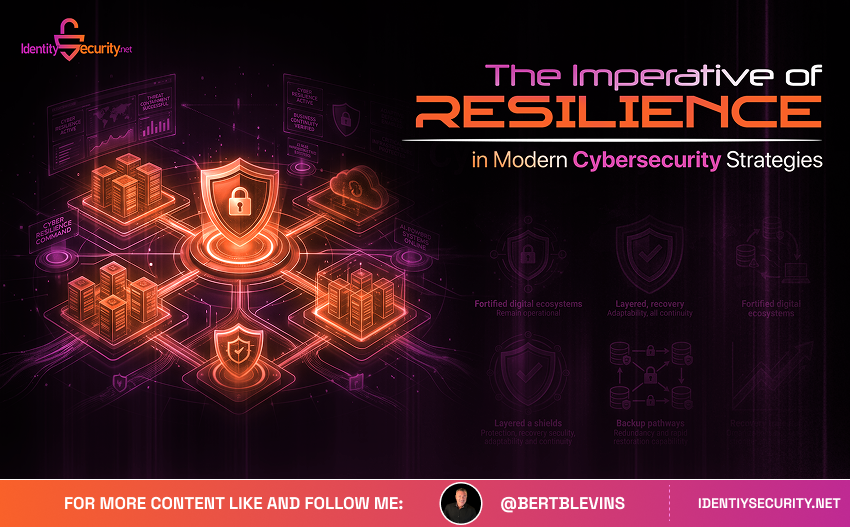
Cyber resilience is the capability to anticipate, withstand, recover from, and adapt to disruptive events while maintaining critical outcomes. It combines security, incident response, disaster recovery, business continuity, and operational readiness into a single strategy aimed at reducing downtime, limiting loss, and sustaining trust.
Recent large-scale disruptions (including widespread endpoint-update failures and cloud/edge service outages) reinforce a core reality: breaches and outages are not hypothetical events. They are recurring operational risks. Resilience is therefore not a “nice to have.” It is a business requirement—especially when paired with automation and AI, which can accelerate detection, containment, and recovery.
What Cyber Resilience Is (and What It Is Not)
If you haven’t noticed, most of your online accounts are heading toward replacing traditional passwords with a more secure credential called a passkey. In the cybersecurity world, passwords are often referred to as “shared secrets” because you need to share them with all the apps and websites (collectively called “relying parties”) you use. Unfortunately, these shared secrets have proven to be one of the weakest aspects of internet security.
Definition
Cyber resilience is an organization’s ability to keep operating and delivering critical services even when cybersecurity incidents or technology failures occur. Resilience is less about perfect defense and more about maintaining outcomes under stress.
How it differs from traditional security
Traditional cybersecurity emphasizes prevention: stopping attackers, blocking malware, hardening systems, and reducing vulnerabilities. These measures remain essential, but they are not sufficient because resilience assumes:
- Some incidents will bypass controls (human error, novel exploits, supplier compromise, credential exposure).
- Some disruptions are non-malicious (misconfigurations, failed updates, expired certificates, routing incidents, platform bugs).
- Recovery speed and continuity are as important as “blocking the incident.”
Resilience treats disruptions as expected operational events and designs the organization to handle them without catastrophic business impact.
Core control types in a resilience program
A resilient program balances three categories of controls:
Preventive controls (reduce likelihood)
- MFA and phishing-resistant authentication
- Least privilege and zero-trust segmentation
- Secure configuration baselines and patch governance
- Vulnerability management and exposure reduction
Detective controls (reduce time-to-detect)
- MFA and phishing-resistant authentication
- Least privilege and zero-trust segmentation
- Secure configuration baselines and patch governance
- Vulnerability management and exposure reduction
Corrective controls (reduce time-to-recover)
- Incident response playbooks and runbooks
- Immutable, tested backups
- Failover and disaster recovery procedures
- Crisis communications and operational fallback plans
Resilience is the program that ensures these controls work together to preserve critical business operations.
Why Resilience Is Becoming Non-Negotiable
1) The economics: breaches and outages are expensive
The cost of cyber incidents extends beyond forensic investigation and remediation. The largest cost drivers often include:
- Business interruption (lost revenue, contract penalties, customer churn)
- Operational slowdown (manual workarounds, halted production, delayed service delivery)
- Recovery labor (overtime, external consultants, emergency procurement)
- Reputation and trust (pipeline impact, deal friction, partner scrutiny)
- Regulatory and legal exposure (notifications, audits, litigation, fines)
Regulatory and legal exposure (notifications, audits, litigation, fines)
Resilience reduces economic damage by shrinking the duration and scope of disruption. Organizations that detect and contain faster reduce both direct costs and the downstream effects of prolonged outages.
2) The operational reality: complexity creates failure modes
Digital transformation has expanded the attack surface and increased fragility:
- Hybrid cloud and multi-cloud environments introduce inconsistent controls, identity sprawl, and shared responsibility gaps.
- Microservices and containers increase the number of moving parts, dependencies, and deployment events.
- CI/CD speed increases change frequency, which raises the probability of a bad release or configuration drift.
- Vendor and supply chain reliance means a single provider outage can affect thousands of customers simultaneously.
Resilience recognizes that complexity itself is a risk factor and focuses on reducing blast radius, ensuring fallback paths, and restoring quickly.
3) The trust factor: resilience protects reputation
In many industries, stakeholder trust depends on how you respond, not whether you were targeted:
- Customers judge availability, transparency, and response competence.
- Partners and enterprises require evidence of tested recovery capabilities.
- Boards increasingly ask for measurable assurance that the organization can withstand disruption.
Resilience builds credibility because it demonstrates preparedness, competence, and control under pressure.
4) The competitive edge: resilient organizations win
Resilience is increasingly a differentiator in:
- Enterprise sales cycles and vendor security reviews
- Insurance underwriting and renewal negotiations
- M&A due diligence and valuations
- Regulatory audits and third-party risk programs
Organizations that can prove tested recovery and operational continuity often reduce business friction and accelerate trust.
Reality Check: Notable Major Outages and What They Teach
Large-scale outages demonstrate that resilience must cover both cyber incidents and systemic technology failures, including supplier disruptions.
CrowdStrike: supply-chain shock through an update
A faulty security update created widespread endpoint instability and business interruption across multiple industries. The key lesson: even security tooling can become a high-blast-radius dependency.
Resilience lessons
- Treat third-party updates like production changes: stage, test, and monitor rollouts.
- Maintain “break-glass” operational paths for endpoint recovery.
- Ensure support for offline recovery methods when endpoints cannot boot normally.
- Validate that incident response includes supplier event scenarios, not just attacker scenarios.
Microsoft Azure: regional disruption with global business impact
Cloud disruptions may be regional at the provider layer but global at the business layer—because a single region may host identity, management planes, or critical workloads.
Resilience lessons
- Design applications with multi-region strategies where justified by business criticality.
- Prepare for management-plane limitations (portal/API issues can block recovery).
- Ensure identity continuity (authentication dependencies can lock out responders).
- Maintain runbooks that assume cloud service degradation, not full availability.
AWS: service events causing downstream cascade
When a major managed service degrades, systems that rely on it may fail in non-obvious ways: buffering grows, queues fill, retries spike, and dependent services melt down under load.
Resilience lessons
- Use circuit breakers, backpressure, and queue controls to prevent retry storms.
- Architect for graceful degradation: partial functionality beats full outage.
- Identify “hidden critical dependencies” (metrics pipelines, auth services, messaging systems).
- Test recovery for cloud-native services, not only compute and storage.
Cloudflare: outage due to internal software error
Not all major outages are attacks. Internal bugs, configuration changes, or routing issues can produce similar operational impact.
Resilience lessons
- Assume critical edge services may fail: design fallback routing and provider diversity.
- Build visibility into edge dependencies to speed detection.
- Establish rapid customer communication procedures during widespread disruptions.
A Practical Cyber Resilience Framework
A useful resilience model focuses on four outcomes:
1) Withstand
Virtual authenticators are distinct from platform-based solutions in several ways:
Design systems so disruptions don’t immediately halt critical services.
Key practices
- Identity hardening: phishing-resistant MFA, conditional access, device posture controls
- Network segmentation: isolate crown jewels, restrict lateral movement
- Application resilience: rate limiting, circuit breakers, graceful degradation patterns
- Dependency mapping: know what breaks when a provider or service fails
- Privileged access discipline: just-in-time access, least privilege, strong auditing
What “good” looks like
- A single compromised endpoint does not expose critical systems.
- A cloud service degradation does not automatically mean total outage.
- Critical services degrade gracefully under stress rather than collapsing.
2) Recover
Restore systems to known-good state quickly and safely.
Key practices
- Immutable backups and secure recovery environments
- Verified restore testing (prove you can restore, not just that backups exist)
- RTO/RPO targets aligned to business impact
- Pre-approved emergency access workflows (no delays during crisis)
- Credential rotation and rapid containment capabilities
What “good” looks like
- Restore processes are tested, measured, and repeatable.
- Recovery doesn’t depend on a single person or undocumented tribal knowledge.
- Recovery can proceed even if cloud consoles or primary tools are degraded.
3) Continue
Keep essential operations running during disruption.
Key practices
- Manual fallback procedures for critical business processes
- Alternate communication channels and crisis comms templates
- Predefined “minimum viable service” modes for customer-facing systems
- Segmented operational playbooks for finance, HR, customer support, and supply chain
- Isolation strategies that keep safe zones functioning while affected zones are contained
What “good” looks like
- Customer support can function even if CRM or ticketing is degraded.
- Finance and payroll have continuity steps for outages.
- Leadership has a clear decision structure and communication plan.
4) Adapt
Improve after every disruption so the next one hurts less.
Key practices
- Post-incident reviews with measurable action items and deadlines
- Updates to runbooks, controls, and training based on lessons learned
- Regular resilience testing: tabletop exercises, red-team/purple-team, chaos drills
- Continuous improvement loops tied to metrics and executive oversight
What “good” looks like
- Every incident produces concrete improvements, not just a report.
- Teams get faster and more coordinated over time.
- Resilience becomes part of engineering culture and operational governance.
Building a Resilient Security Posture
Step 1: Identify critical assets and dependencies (the “crown jewels” map)
Start by defining what must not fail:
- Identity systems (SSO, MFA, directory services)
- Privileged access systems and admin tooling
- Production workloads and revenue-generating services
- CI/CD and code repositories
- Data platforms (customer data, billing systems, operational databases)
- External dependencies (cloud providers, DNS, CDN/edge, monitoring, endpoint agents)
Then assess:
- Business impact if each fails
- Recovery requirements and tolerances
- Cross-dependency chains (“if X fails, Y fails, then Z”)
Deliverable: a prioritized list of services with clear RTO/RPO targets and dependency diagrams.
Step 2: Mature incident response + business continuity together
Incident response often focuses on containment and eradication, while business continuity focuses on maintaining operations. Resilience requires them to be integrated.
Key improvements
- Align IR playbooks with BCP/DR workflows (contain and continue simultaneously)
- Define decision-making authority and escalation paths
- Maintain prebuilt communications (internal, customer, regulatory, partner)
- Run tabletop exercises that assume:
- cloud console/API outage
- identity provider degradation
- endpoint fleet instability
- third-party update failure
- loss of a key SaaS provider (ticketing, monitoring, collaboration)
Deliverable: tested playbooks for both attacker incidents and provider/systemic outages.
Step 3: Improve detection and response with automation
Speed matters. Automation reduces the time between detection and containment, and it reduces human error under pressure.
High-value automation opportunities
- Automated enrichment of alerts (asset context, identity context, threat intel)
- SOAR playbooks for common incidents (phishing, malware isolation, credential reset)
- Automated containment actions with approvals (isolate device, disable account, revoke tokens)
- Recovery orchestration (restore, redeploy, validate service health)
Deliverable: prioritized automation roadmap tied to MTTR reduction.
Step 4: Test regularly and measure outcomes
Resilience that isn’t tested is only a theory.
Testing program
- Restore tests for critical data and systems
- DR failover drills for critical applications
- Red-team/purple-team exercises for attacker scenarios
- Chaos and dependency failure drills (simulate cloud outage, DNS failure, identity degradation)
Deliverable: quarterly resilience scorecard with trend lines for recovery performance.
Solution Area: Resilient Secrets and Privileged Access Continuity (Including Delinea)
Why secrets are a resilience priority
During an outage or cyber event, responders often need privileged access immediately to:
- rotate credentials and revoke compromised access
- access segmented recovery systems
- restore infrastructure and applications
- re-establish trust in identity systems
- bring critical services back online safely
If privileged credentials and secrets are unavailable—or trapped behind an unavailable system—recovery can stall. In practice, secrets availability becomes a gating factor for recovery speed.
Adding Delinea’s Resilient Secrets to the resilience stack
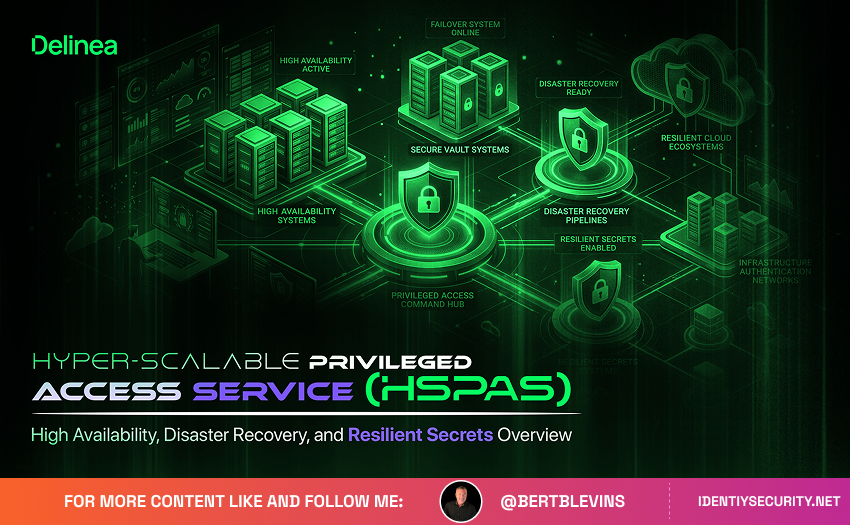
Delinea’s Resilient Secrets is positioned to replicate secrets data from a primary instance to a secondary replica, supporting disaster recovery and continuity access when the primary environment is degraded or unavailable. This supports an operational goal: keeping responder access to critical secrets available during disruption.
At the same time, resilient secrets should be implemented as part of a broader continuity strategy—not as a standalone replacement for enterprise DR, identity continuity, or infrastructure failover.
Where Resilient Secrets fits in your resilience architecture
Disaster recovery readiness
- Replicated secrets support recovery workflows when primary systems are impaired.
Operational continuity
- “Break-glass” access helps teams regain control of systems during critical events.
Reduced single points of failure
- Secrets availability is maintained even if primary services degrade.
Hybrid support
- Useful for organizations spanning on-prem and cloud recovery environments.
Recommended implementation approach (expanded)
1. Define recovery personas and permissions
- IR lead: approves emergency actions
- IAM lead: token/session revocation, credential rotation
- Infrastructure lead: restore, failover, redeploy
- App owners: service validation and functional recovery
- Compliance/security operations: audit and oversight
2. Design segmented break-glass access
- Separate emergency roles from day-to-day admin roles
- Require strong authentication and short-lived access
- Log every access, retrieval, and secret usage event
- Define approval paths and emergency override conditions
3. Replicate only what is operationally critical
- Domain admin recovery credentials
- Cloud break-glass accounts
- CI/CD and deployment keys needed for recovery
- Database admin credentials for restore operations
- Network/security appliance credentials required for containment
4. Run drills that validate real recoverability
- Simulate “primary secrets platform unavailable”
- Validate access to the replica
- Prove credential rotation and recovery actions can execute end-to-end
- Document gaps and fix them immediately
5. Integrate observability and governance
- Alert on unusual secret access patterns during incidents
- Review access logs after every drill and real event
- Tie secrets continuity testing to quarterly resilience reviews
Resilience Metrics That Executives Understand (expanded)
Track a small number of measurable indicators that connect to business outcomes:
Detection and containment
- Mean Time to Detect (MTTD)
- Mean Time to Respond (MTTR)
- Time to contain (stop spread / stop impact)
Recovery performance
- Restore success rate (percentage of restores that succeed in testing)
- RTO achievement (did you meet recovery time targets?)
- RPO achievement (how much data loss occurred?)
Continuity readiness
- Break-glass access readiness (tested ability to regain admin control)
- Secrets continuity readiness (access to critical secrets during simulated outages)
- Runbook completeness and usage rate (are playbooks current and followed?)
Third-party dependency posture
- Critical vendor list with tested fallback plans
- Percentage of critical services with “provider outage scenario” runbooks
- Frequency of dependency failure drills
A resilience program becomes credible when metrics are tracked consistently and used to drive funding and prioritization.
30/60/90-Day Implementation Roadmap (expanded)
First 30 days: establish the baseline
- Identify and rank critical services and dependencies
- Define top 5–10 “crown jewel” systems and business impact
- Set RTO/RPO targets aligned with leadership expectations
- Inventory privileged access paths and secrets availability gaps
- Establish a standardized incident severity model and escalation process
Outputs
- Crown jewel map + dependency diagram
- Initial resilience risk register
- Draft tabletop schedule for next 60 days
60 days: implement and test core capabilities
- Update IR + DR playbooks to include systemic outage scenarios
- Improve backup strategy: immutability, isolation, restore validation
- Implement a resilient secrets strategy, including Delinea’s Resilient Secrets where appropriate
- Run at least one tabletop exercise assuming “cloud console unavailable”
- Validate break-glass access and emergency comms plan
Outputs
- Tested tabletop results and action plan
- Measured restore test results for at least 1–2 critical systems
- Documented break-glass and secrets continuity procedures
90 days: operationalize resilience
- Run a full restore test with measured RTO/RPO outcomes
- Implement targeted automation to reduce MTTR
- Establish quarterly resilience governance: drills, PIRs, and vendor reviews
- Build executive reporting: scorecard, trend lines, and investment priorities
Outputs
- Quarterly resilience scorecard
- Repeatable test calendar and owners
- Clear next-quarter investment plan tied to outcomes
Conclusion
Resilience is now a defining attribute of mature cybersecurity programs. The real question is not whether incidents and disruptions will happen—but whether your organization can continue operating, recover quickly, and learn faster than the next disruption.
Recent large-scale disruptions across endpoint ecosystems and major cloud/edge providers have shown how quickly modern systems can fail and how broadly the impact can spread. A resilient posture combines prevention with recoverability, continuity, and adaptation—supported by tested processes, measurable metrics, and critical capabilities like resilient secrets management to keep privileged access available when it matters most.