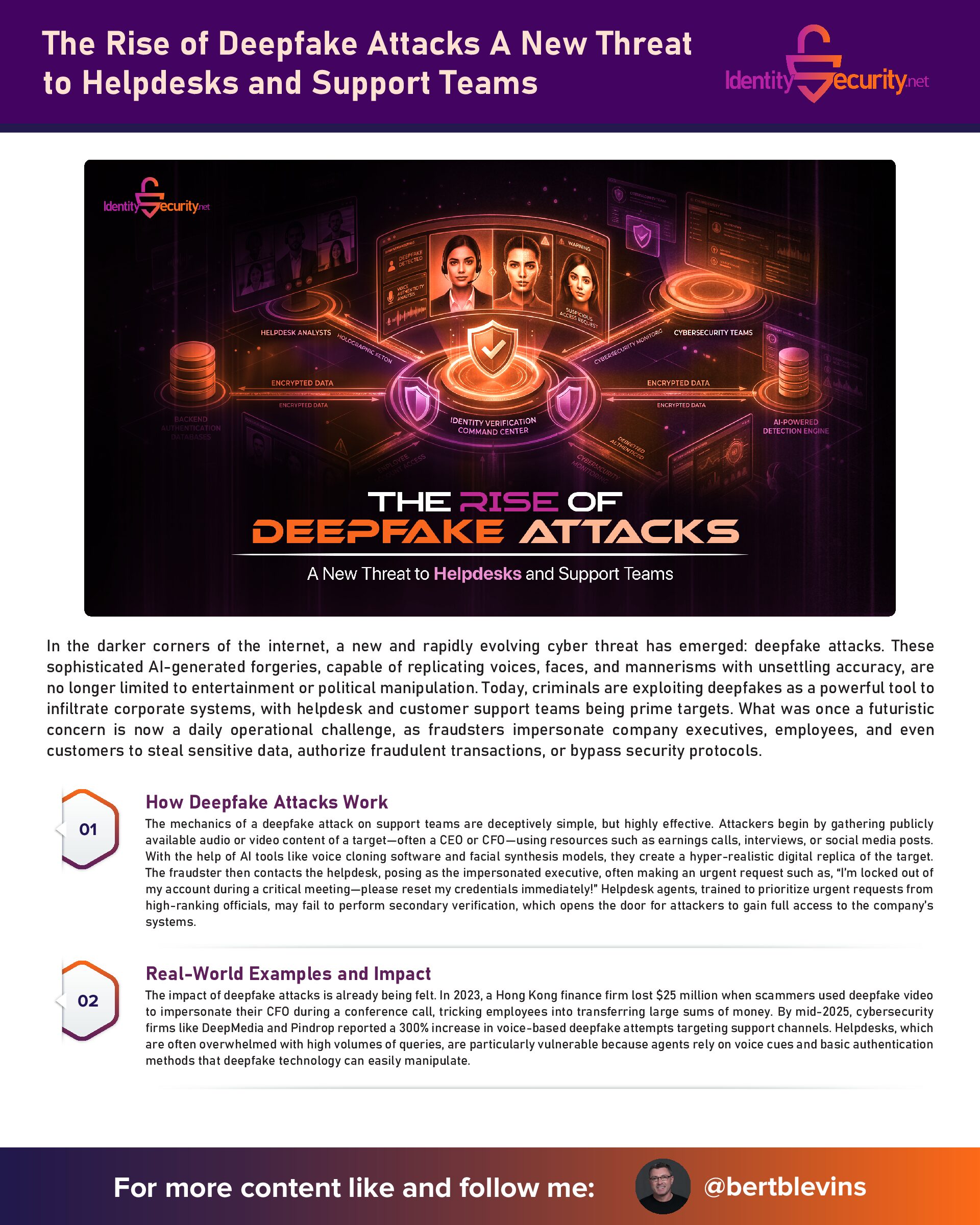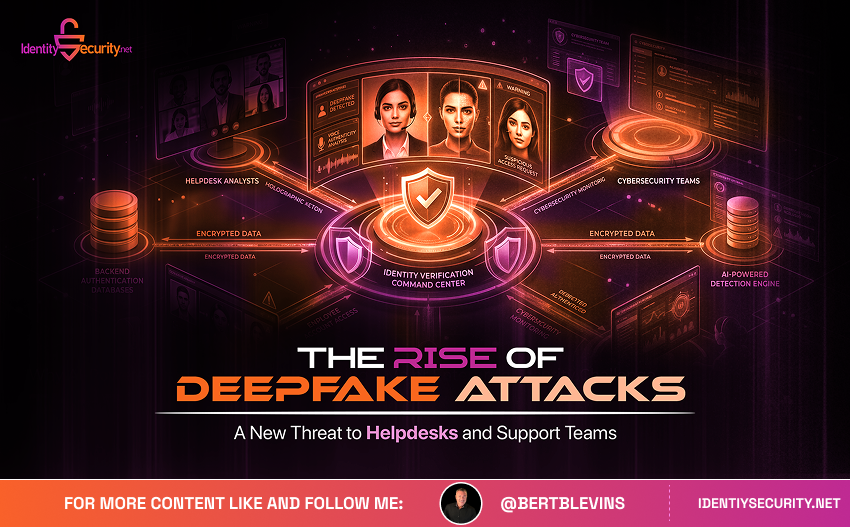
The Rise of Deepfake Attacks: A New Threat to Helpdesks and Support Teams
In the darker corners of the internet, a new and rapidly evolving cyber threat has emerged: deepfake attacks. These sophisticated AI-generated forgeries, capable of replicating voices, faces, and mannerisms with unsettling accuracy, are no longer limited to entertainment or political manipulation. Today, criminals are exploiting deepfakes as a powerful tool to infiltrate corporate systems, with helpdesk and customer support teams being prime targets. What was once a futuristic concern is now a daily operational challenge, as fraudsters impersonate company executives, employees, and even customers to steal sensitive data, authorize fraudulent transactions, or bypass security protocols.
How Deepfake Attacks Work
The mechanics of a deepfake attack on support teams are deceptively simple, but highly effective. Attackers begin by gathering publicly available audio or video content of a target—often a CEO or CFO—using resources such as earnings calls, interviews, or social media posts. With the help of AI tools like voice cloning software and facial synthesis models, they create a hyper-realistic digital replica of the target. The fraudster then contacts the helpdesk, posing as the impersonated executive, often making an urgent request such as, “I’m locked out of my account during a critical meeting—please reset my credentials immediately!” Helpdesk agents, trained to prioritize urgent requests from high-ranking officials, may fail to perform secondary verification, which opens the door for attackers to gain full access to the company’s systems.
Real-World Examples and Impact
The impact of deepfake attacks is already being felt. In 2023, a Hong Kong finance firm lost $25 million when scammers used deepfake video to impersonate their CFO during a conference call, tricking employees into transferring large sums of money. By mid-2025, cybersecurity firms like DeepMedia and Pindrop reported a 300% increase in voice-based deepfake attempts targeting support channels. Helpdesks, which are often overwhelmed with high volumes of queries, are particularly vulnerable because agents rely on voice cues and basic authentication methods that deepfake technology can easily manipulate.
Why Helpdesks Are Vulnerable Targets
Helpdesks represent a significant weakness in many organizations’ security frameworks. Unlike IT departments, which typically implement multi-factor authentication (MFA) protocols, support teams often rely on trust-based systems designed to provide fast customer service. A 2024 Verizon DBIR supplement revealed that 68% of social engineering breaches involved interactions with helpdesks. Deepfakes amplify this vulnerability by adding a layer of realism that traditional phishing methods lack. The rise of remote work, where video calls have become routine but verification practices are often lax, has made it easier for attackers to exploit the human tendency to trust familiar voices and faces. What might seem like a routine password reset request can quickly become a multimillion-dollar fraud scheme.
The Technology Behind Deepfake Attacks
The technology behind deepfakes has become more accessible, contributing to the surge in attacks. Open-source AI tools like ElevenLabs for voice synthesis and DeepFaceLab for video manipulation require minimal technical expertise and can be run on consumer-grade hardware. Additionally, cybercrime-as-a-service marketplaces on the dark web now offer “deepfake kits” for as little as $500, complete with pre-trained models. This democratization of technology means both amateur hackers and organized crime groups can easily launch deepfake attacks, leading to a sharp increase in “urgent requests” from executives that appear to be legitimate.
Gaps in Security and Defenses
While many organizations are working to develop defenses against these attacks, significant gaps in security remain. Many companies still rely on outdated knowledge-based verification methods, such as asking personal questions like “What’s your mother’s maiden name?” These methods can be easily bypassed by attackers who scrape social media profiles for answers. Some companies have begun using AI-driven detection tools that analyze biometric inconsistencies, such as irregular lip sync or unnatural blinking patterns. Companies like Nuance and BioID are rolling out real-time voice authenticity checks, but these solutions are not yet widespread, especially in mid-sized firms where cost concerns often limit the adoption of advanced security measures.
The Human Element: The Weakest Link
Despite advances in AI-driven detection, the human element remains the weakest link in this cybersecurity battle. Support teams need updated protocols to handle high-risk requests, such as mandatory callbacks to verified phone numbers, out-of-band confirmations via secure channels, or the use of “safe words” known only to authorized insiders. Training and simulations using ethical deepfakes can help desensitize agents to the threat, teaching them to question even the most convincing requests. As deepfake technology continues to evolve, incorporating real-time generation during live calls, the window for human error narrows, pushing the industry toward zero-trust security models where no voice or face is trusted automatically.
Conclusion: The Urgency of Proactive Defense
Deepfake attacks targeting helpdesks are no longer a distant threat—they are a rapidly growing concern. With deepfake incidents doubling every quarter and potential financial losses in the billions, organizations must treat support teams as critical security gateways, not just customer service points. Ignoring this rising threat will inevitably lead to devastating consequences. To protect themselves, companies must invest in advanced detection tools, update verification processes, and prioritize awareness and training across all levels of support teams. The rise of deepfake technology serves as a stark reminder that trust can be weaponized. Defending against it requires vigilance, preparation, and an evolving security mindset.