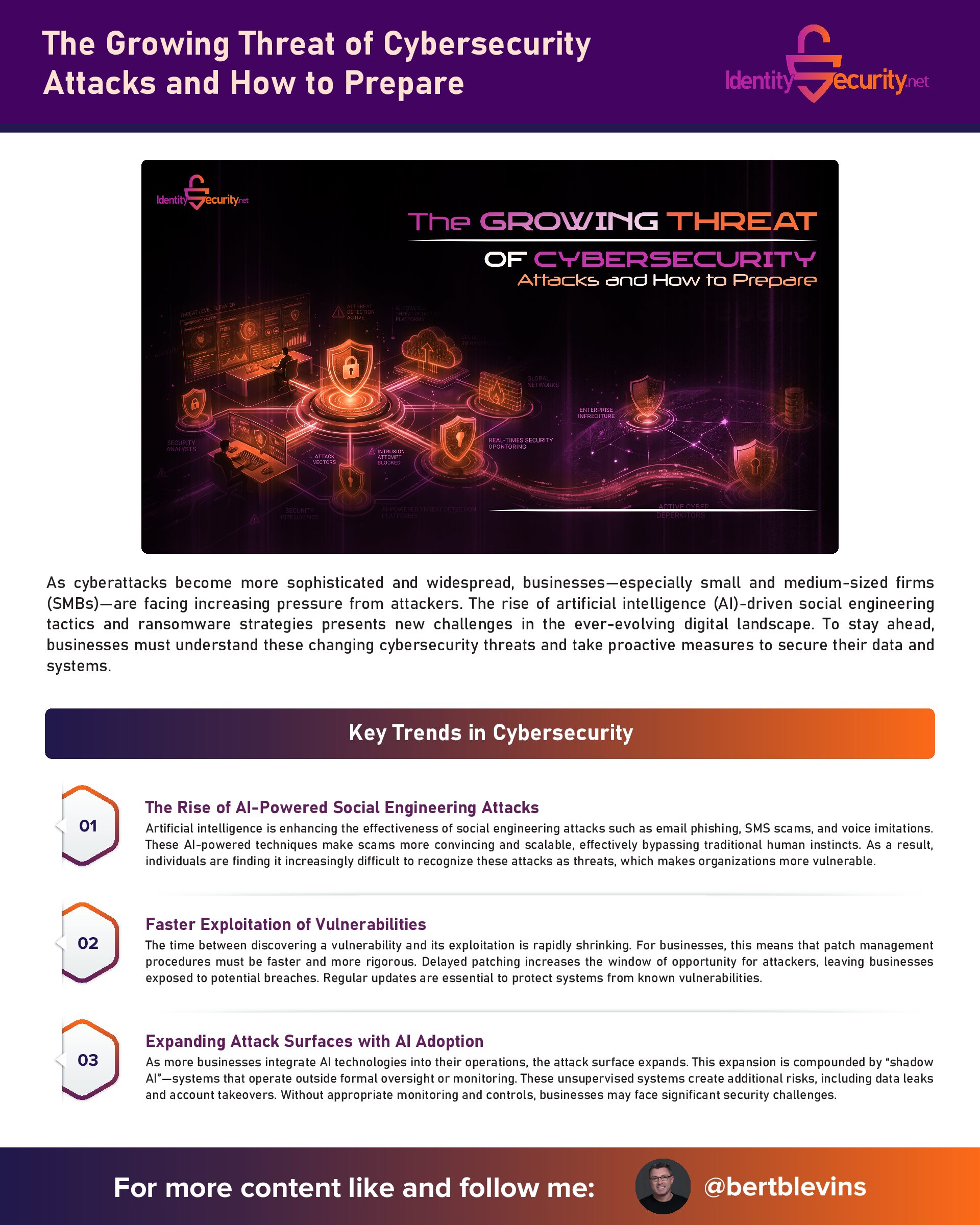
The Growing Threat of Cybersecurity Attacks and How to Prepare
As cyberattacks become more sophisticated and widespread, businesses—especially small and medium-sized firms (SMBs)—are facing increasing pressure from attackers. The rise of artificial intelligence (AI)-driven social engineering tactics and ransomware strategies presents new challenges in the ever-evolving digital landscape. To stay ahead, businesses must understand these changing cybersecurity threats and take proactive measures to secure their data and systems.
Key Trends in Cybersecurity
1. The Rise of AI-Powered Social Engineering Attacks
Artificial intelligence is enhancing the effectiveness of social engineering attacks such as email phishing, SMS scams, and voice imitations. These AI-powered techniques make scams more convincing and scalable, effectively bypassing traditional human instincts. As a result, individuals are finding it increasingly difficult to recognize these attacks as threats, which makes organizations more vulnerable.
2. Faster Exploitation of Vulnerabilities
The time between discovering a vulnerability and its exploitation is rapidly shrinking. For businesses, this means that patch management procedures must be faster and more rigorous. Delayed patching increases the window of opportunity for attackers, leaving businesses exposed to potential breaches. Regular updates are essential to protect systems from known vulnerabilities.
3. Expanding Attack Surfaces with AI Adoption
As more businesses integrate AI technologies into their operations, the attack surface expands. This expansion is compounded by “shadow AI”—systems that operate outside formal oversight or monitoring. These unsupervised systems create additional risks, including data leaks and account takeovers. Without appropriate monitoring and controls, businesses may face significant security challenges.
4. Ransomware Shifts in Focus
As an increasing number of businesses refuse to pay ransom demands, attackers are adjusting their tactics. They are using stolen data more strategically and implementing more sophisticated methods of extortion. This shift is making recovery more difficult, as attackers are designing attacks that make it harder to restore systems from backups. This evolving approach puts additional strain on businesses already battling security breaches.
Effective Cybersecurity Measures for SMBs
To defend against these evolving threats, SMBs should focus on several key cybersecurity practices:
- Multi-Factor Authentication (MFA) Everywhere
Implementing MFA—especially for email and administrative accounts—adds an additional layer of security. Even if attackers manage to acquire login credentials, MFA ensures that they cannot easily gain access without further verification.
- Urgent Patch Management
Ensure that internet-facing systems are patched regularly and promptly to mitigate the risks of known vulnerabilities. Delayed patching significantly increases the likelihood of a successful attack. Regular updates are essential to maintaining secure systems.
- Email Security and Staff Verification
Strengthen email security protocols and establish clear procedures for staff verification, such as validating password resets and vendor changes. These steps help prevent attackers from exploiting weak points in the system.
- Immutable Backups and Regular Restoration Testing
Maintain backups that cannot be altered or tampered with by attackers. Additionally, regularly test these backups to ensure they can be quickly restored in the event of a cyberattack, minimizing downtime and loss of data.
- Proactive Monitoring
Implement monitoring systems that can detect intrusions early, preferably before ransomware or other malicious activities execute. Early detection is key to limiting damage and taking swift action to secure systems.
Conclusion: A Resilient Future with AI
As AI continues to advance, it will play a dual role as both a tool for attackers and defenders. Attackers will leverage AI to scale their attacks, but businesses that approach cybersecurity as a form of resilience—rather than just an IT task—will be better positioned to survive and thrive. Preparing for the future means conducting regular cybersecurity drills, adopting advanced technologies, and ensuring that security is a priority across all aspects of the organization.
For businesses seeking a streamlined approach to cybersecurity, a simple one-page checklist that focuses on patching, backups, email restrictions, identity hardening, and staff training can serve as an essential starting point. These foundational measures will provide a solid defense in the face of an increasingly complex threat environment.