Identity Security Articles

Identity Security Articles & Insights

Explore expert perspectives, in-depth articles, and the latest insights on identity security, access management, authentication, zero trust, machine identities, privileged access, and AI agent security.
IDENTITY SECURITY RESOURCE VERIFIED
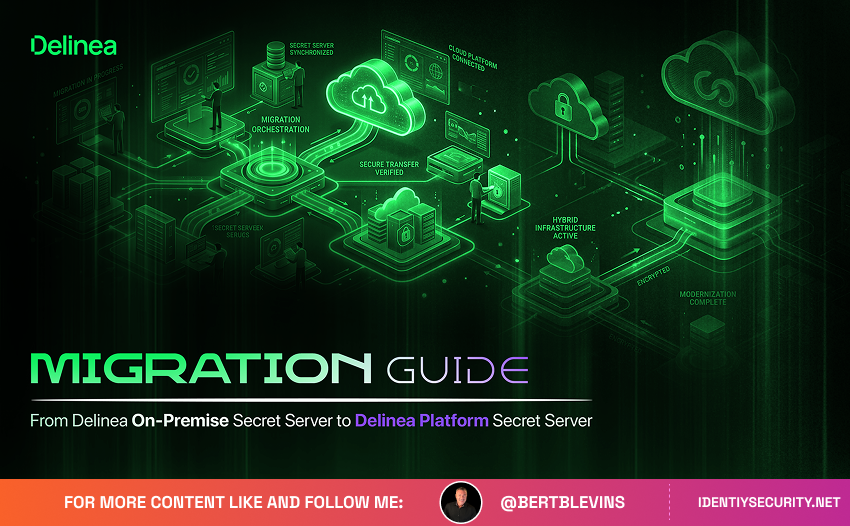
This expanded guide builds on the original outline by providing more in-depth explanations, additional considerations, best practices, and potential pitfalls for each step in migrating from Delinea Secret Server (on-premise) to the Delinea Platform (cloud-based Secret Server). The process requires careful planning to minimize risks like data loss, downtime, or security gaps. As before, this is based on official Delinea resources and general IT migration principles—always verify with Delinea’s latest documentation, as features may evolve. Test everything in a non-production environment, and engage Delinea support or a professional services team for complex setups involving high volumes of data or custom integrations.
Delinea Privileged Control for Servers (PCS) uses agents to manage privileges on servers, primarily Linux/UNIX and Windows servers. These agents allow servers to join Active Directory domains and zones for privilege elevation, auditing, and control. The process involves downloading the agent from your Delinea Platform tenant and installing it manually on each server. Below are the steps focused on manual installation.
Delinea Privilege Manager supports seamless integration with Microsoft Entra ID (formerly Azure Active Directory) to manage least-privilege access, application control policies, and role-based access effectively. This integration allows the importation of Entra ID security groups into Privilege Manager, making them available for policy application, role assignments, and endpoint management. While full access requires users to be added to Privilege Manager roles, group synchronization is available now with advanced group/role assertions planned for future releases.
The Hyper-Scalable Privileged Access Service (HSPAS) is designed for large production environments, offering robust High Availability (HA) and Disaster Recovery (DR) capabilities. The service ensures critical applications are resilient, with scalability to support growing infrastructure demands while maintaining high uptime and security.
This guide outlines how to configure a primary front-end web node running on Windows Server in one on-premise data center (e.g., Data Center A) connected to a SQL database cluster, while maintaining a cold standby front-end server in another on-premise data center (e.g., Data Center B) for disaster recovery. A “cold standby” means the backup server is powered off or inactive until needed, reducing costs but requiring manual or scripted activation during failover.
Scammers are exploiting publicly available information to steal funds from unsuspecting individuals, while regulatory loopholes and industry pushback continue to hinder victims’ ability to recover their stolen money.
As the rush to integrate agentic AI systems into workflows accelerates, there’s a concerning oversight: autonomy brings unpredictability, and unpredictability poses security risks. If we don’t reassess how we protect these systems, we may soon find ourselves facing threats we barely comprehend, on a scale we’re ill-equipped to manage.
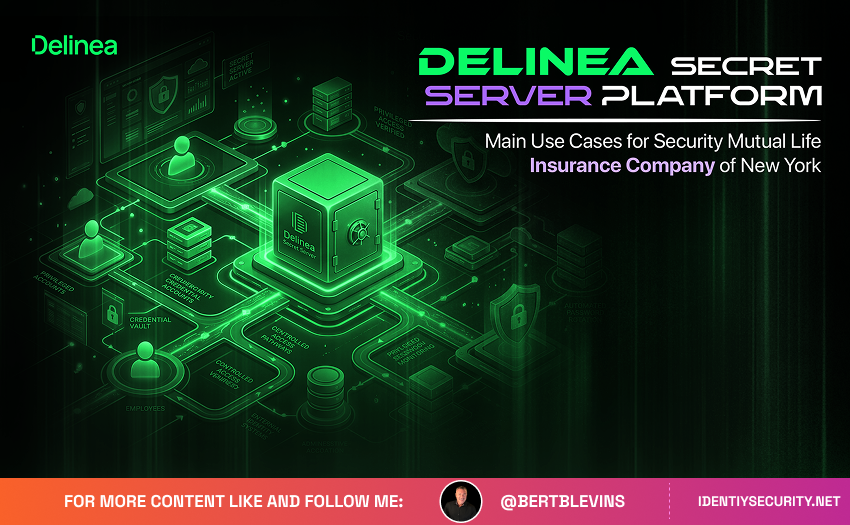
The Delinea Secret Server Platform is a robust Privileged Access Management (PAM) solution designed to secure, manage, and govern privileged accounts across hybrid environments. For Security Mutual Life Insurance Company of New York (SMLINY), a financial services provider handling sensitive customer data, policy information, and regulatory compliance requirements (e.g., NYDFS cybersecurity regulations), this platform is essential for mitigating insider threats, enforcing least privilege, and streamlining audits. By centralizing privileged credential management, Secret Server helps SMLINY reduce breach risks, ensure compliance with standards like SOX and HIPAA, and optimize operational efficiency in its on-premises Active Directory (AD) and local workstation ecosystems.
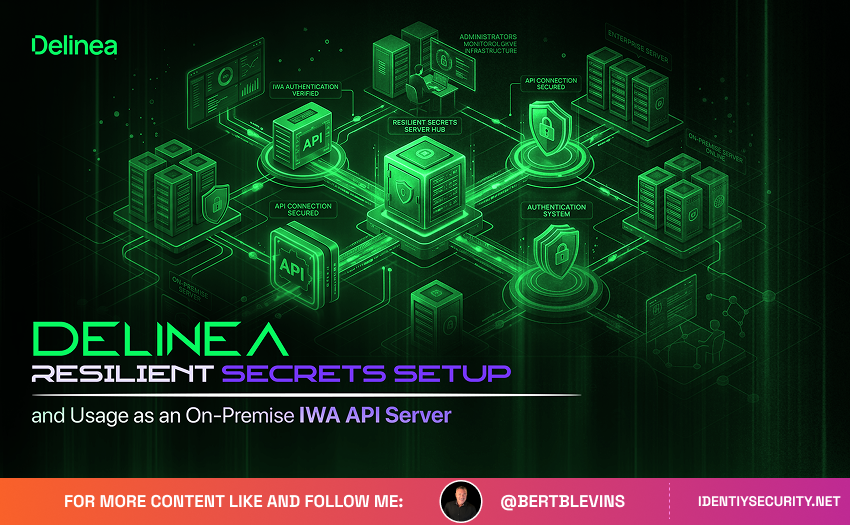
This document provides a comprehensive guide to setting up Delinea Secret Server on-premise with Resilient Secrets for enhanced high availability and disaster recovery. Resilient Secrets facilitates one-way data replication from a primary (source) Secret Server instance to a secondary (replica) instance, ensuring that critical secrets remain accessible even in the event of outages or failures. After establishing the Resilient Secrets configuration, this guide details how to configure the on-premise instance to function as an Integrated Windows Authentication (IWA) API server, enabling secure, credential-less API access for automation and integrations.
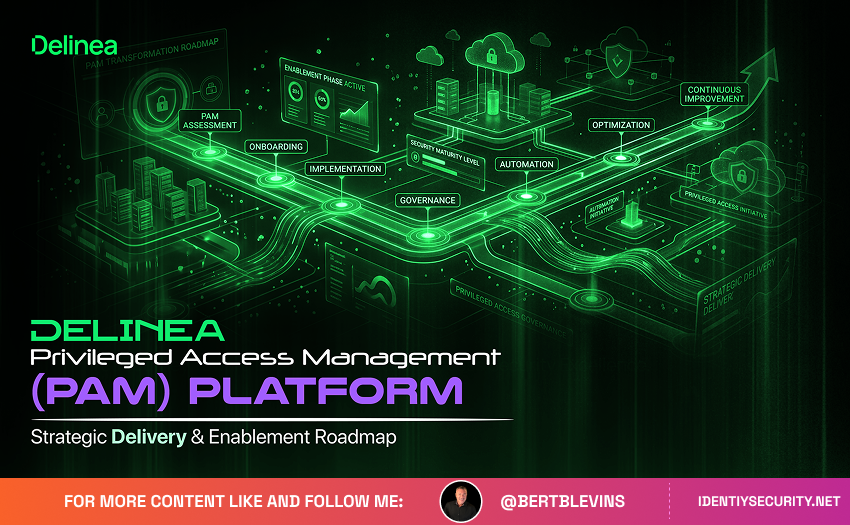
WHSmith North America (WHSNA) has successfully completed the Proof of Concept (POC) phase of the Delinea Platform deployment, validating core functionality including cloud tenant provisioning, identity synchronization, and SAML-based SSO. The next phase transitions into production readiness and phased enterprise rollout, leveraging 40 hours of Professional Services Enablement to ensure secure, scalable, and sustainable privileged access management.
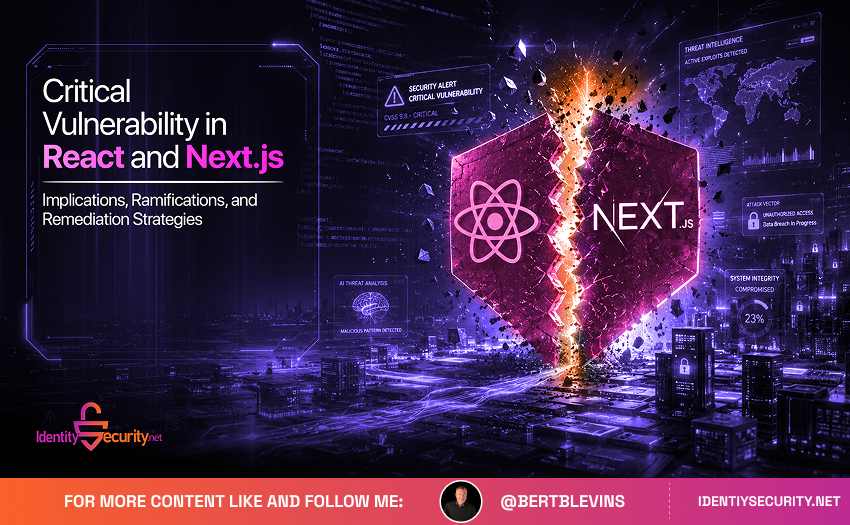
Most of you have probably heard about a major vulnerability found in React (a popular JavaScript library) and Next.js (a React framework). These are widely used tools in modern web development, with an estimated 40% of all cloud environments leveraging them to build scalable and dynamic applications. Given their widespread adoption, any vulnerabilities in these technologies can have widespread consequences for organizations using them. The specific vulnerability in question is an unauthenticated remote command execution vulnerability, which allows attackers to execute arbitrary commands on affected systems without any authentication.
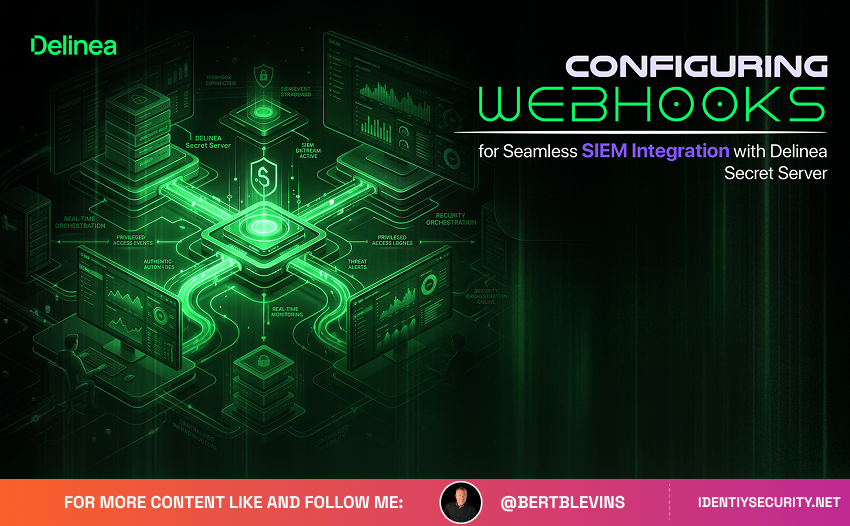
Delinea Secret Server is integrated within the Delinea Platform, which supports webhooks for sending real-time event notifications, including log events, to external systems like SIEM (Security Information and Event Management) tools. Webhooks allow you to automate the forwarding of audit logs, security events, and other activities to your SIEM for monitoring, analysis, and alerting. This is particularly useful for compliance and threat detection.